Español
 日本語
日本語 Deutsch

Article Directory
- 1 What a Full Mesh Office Chair Demands from a Manufacturer
- 2 Five Core Criteria for Assessing a Mesh Chair Manufacturer
- 3 Component-Level Specifications to Verify Before You Order
- 4 Quality Control, Lead Time, and After-Sales Support
- 5 A Practical Checklist for Shortlisting Suppliers
- 6 Start with a Sample Order Before Scaling Up
- 7 Making the Final Decision
Your first bulk order of full mesh office chairs arrives on schedule. Six months later, fifteen percent come back. The mesh has sagged on the seat, the gas lift fails on a quarter of the units, and the tilt mechanisms have become noisy. Returns, replacements, and a damaged reputation follow.
This outcome is the risk when a buyer selects a supplier based only on price. Choosing a reliable full mesh office chair manufacturer is a risk management exercise, not a cost comparison. You need a factory that can demonstrate, in writing, how it controls mesh quality, component standards, production consistency, and after-sales support. The framework below shows what to evaluate before you sign a purchase order.
What a Full Mesh Office Chair Demands from a Manufacturer
Full mesh office chairs are more demanding to produce than padded chairs. The mesh fabric serves as the actual support surface for both the seat and the backrest, which creates three challenges that a factory must control.
First, mesh tension. The fabric is stretched across the frame. If the tension is uneven, the chair develops a lopsided seat, the mesh sags after a few weeks, and the user feels the frame pressing through the fabric. Second, frame integration. The mesh is attached to a nylon or metal frame, and the bond must withstand hundreds of cycles of loading and movement. Third, long-term durability. A full mesh chair is used eight to twelve hours a day in offices and home offices. The weave, the frame, and the tilt mechanism share that workload.
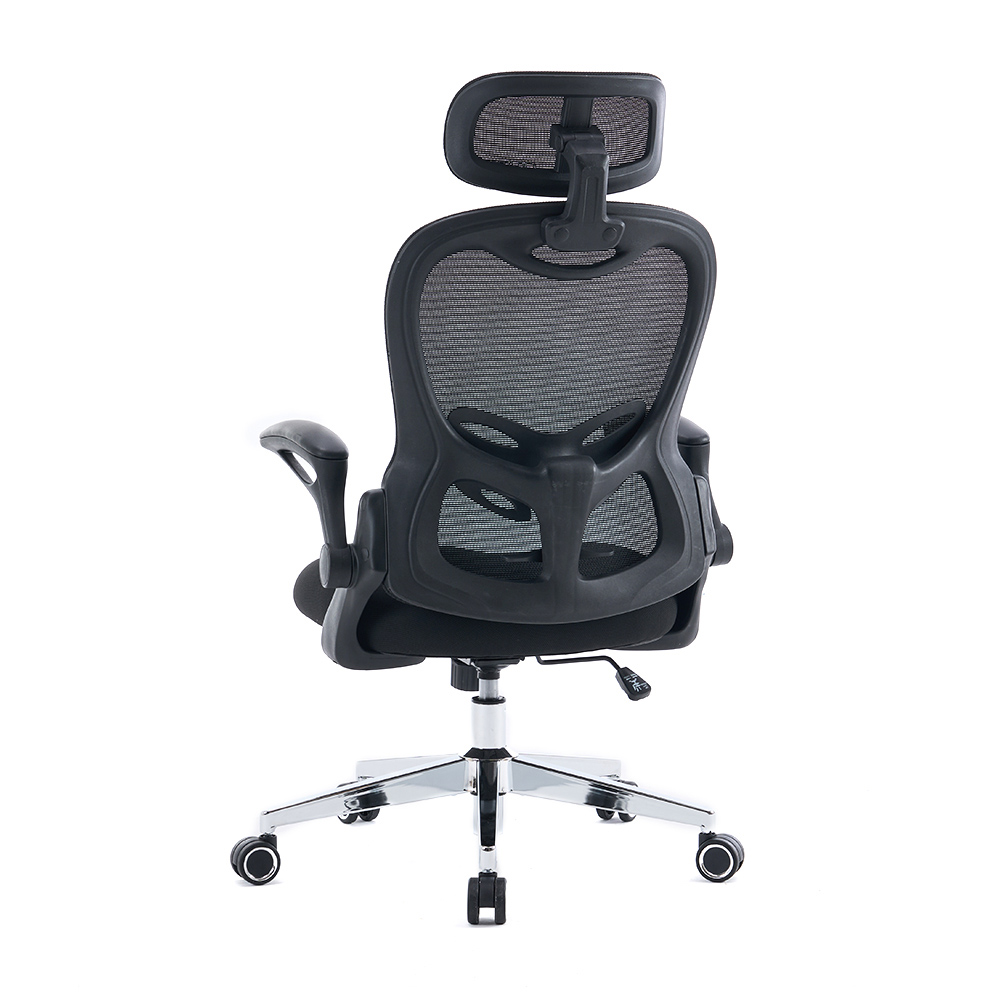 Ergonomic high-back mesh office chair with adjustable lumbar supportThis black mesh chair is built for long office sessions, featuring a breathable backrest, adjustable lumbar support, and a synchronized tilt mechanism to promote posture and reduce fatigue.View Product →
A factory that has not solved these three problems will not deliver consistent full mesh chairs across a production run. That is why the first screen in any supplier search should be the factory's product lineup and production setup.
Five Core Criteria for Assessing a Mesh Chair Manufacturer
Across Anji's furniture manufacturing cluster, the same five criteria separate reliable factory partners from unreliable ones. Use them as your evaluation framework.
| Criterion | What to Confirm | Red Flag |
|---|---|---|
| Production capability | Factory floor area, staffing, and dedicated assembly lines for mesh chairs | Showroom exists but no real production facility |
| R&D and design | In-house engineering team, mold development, and prototyping ability | Can only replicate existing market designs |
| Mesh sourcing | Material specifications, denier, weave quality, and batch consistency | No data on mesh composition or supplier |
| Quality testing | Incoming inspection, in-process checks, final sampling, and test equipment | No documented QC process exists |
| Export experience | North American or European references, packaging and documentation | Limited export history or customs knowledge |
What do these criteria have to do with your order? Everything. A factory with an in-house R&D team can adjust a design flaw in days, while a simple assembler needs weeks to source a changed component. A factory with documented QC samples the final order using AQL standards. A factory without documentation cannot be audited, and its quality depends on the mood of the assembly line.
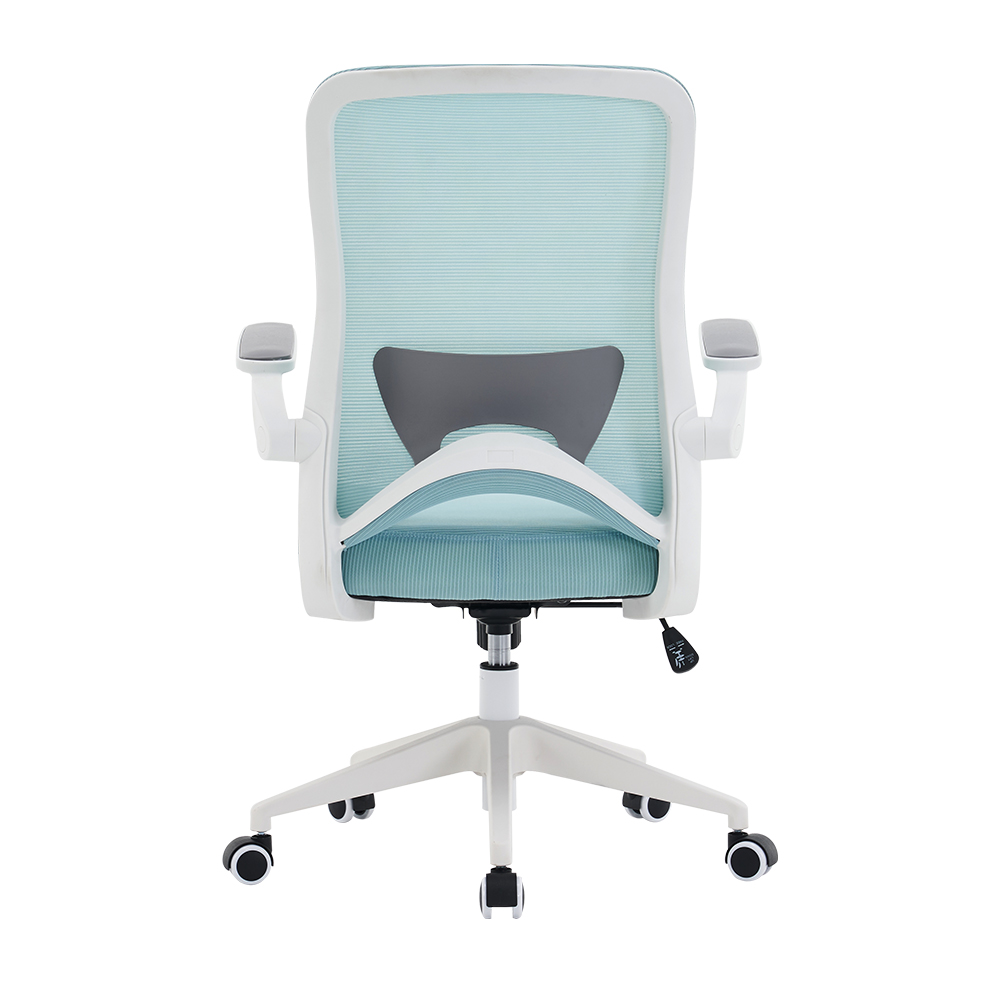 Durable breathable mesh office chair for extended daily useDesigned for long hours at a desk, this chair offers a ventilated mesh back, tested components, and ergonomic support to keep users comfortable and productive in demanding work environments.View Product →
These differences turn a good first order into a repeatable, long-term supply relationship.
Component-Level Specifications to Verify Before You Order
The components inside a full mesh office chair determine how many years it stays in service. Before ordering, request a complete specification sheet and compare it against the following references.
Gas lifts are classified by safety standard. Class 3 or Class 4 lifts are appropriate for everyday office use, while Class 2 lifts are common on budget chairs and fail under heavy users or frequent rotation. The base should be nylon with glass fiber reinforcement, or aluminum alloy for premium models. The seat frame should use high-density nylon with a meaningful glass fiber content. Standard polypropylene may crack under heavy loads.
Mesh quality is usually expressed in denier. A 300D or higher weave offers a tighter surface and better long-term durability than lighter weaves. The tilt mechanism, whether spring-based or damper-based, should allow backrest angle adjustment and a locking function.
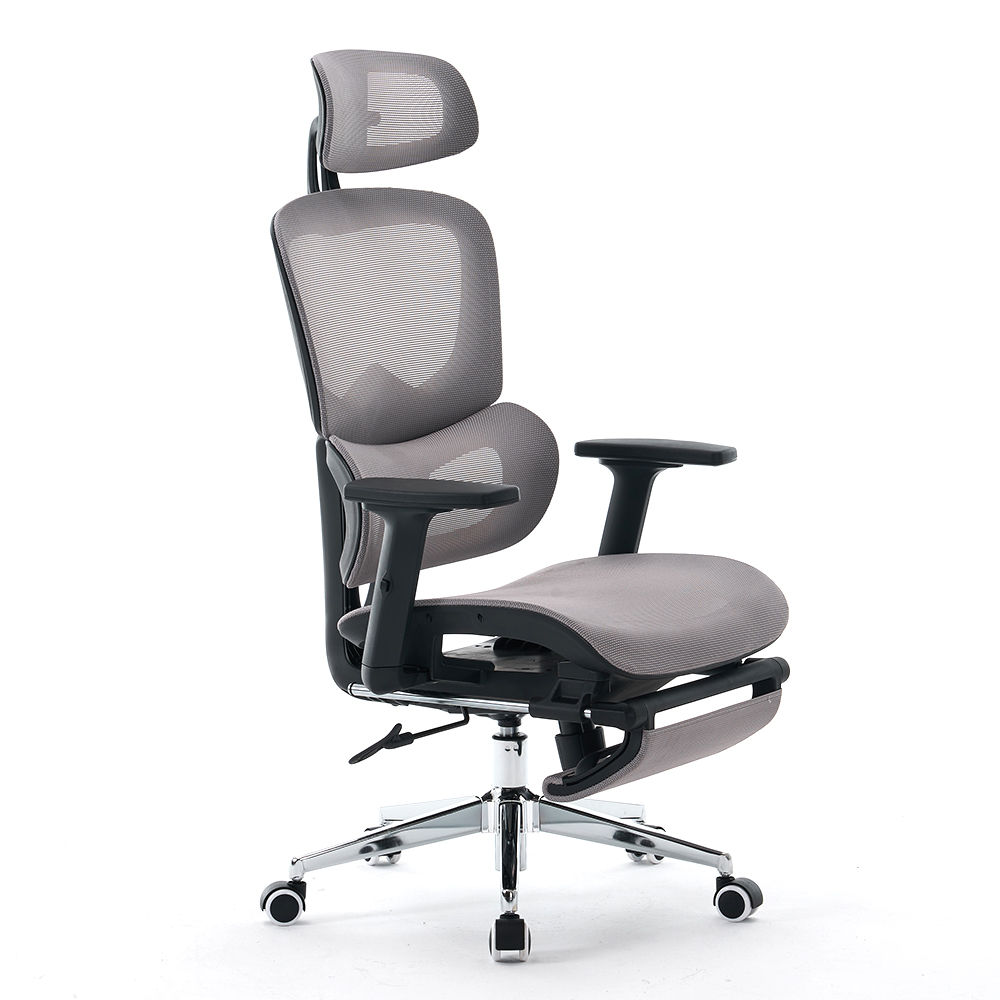 Adjustable mesh computer chair with 2D armrests for home officeThis ergonomic chair provides a breathable mesh back, 2D adjustable armrests, and multiple locking recline positions, making it a versatile choice for personalized comfort in home or office settings.View Product →
Also check the seat height range and weight capacity. A factory that states 120 kilograms as its tested maximum gives you a specification to plan around. A factory that cannot state these numbers has likely never tested them.
Quality Control, Lead Time, and After-Sales Support
Quality control is the difference between a factory that ships good chairs and one that ships consistent chairs. Ask every candidate to describe its QC process in three phases. Incoming material inspection verifies that mesh, frames, and components meet specification. In-process checks happen during assembly and cover tension, alignment, and mechanism function. Final sampling before packing follows an Acceptable Quality Limit plan, commonly AQL 1.0 for major defects and 2.5 for minor defects.
If a factory has no written AQL standard, you have no defensible basis for a return claim. Third-party test reports such as BIFMA X5.1 or EN 1335 show that a factory designs to recognized industry benchmarks. For a closer look at how mesh materials affect seat performance, we have published a technical analysis of mesh ergonomic office chairs.
Lead time is the second half of reliability. A standard full mesh office chair order takes thirty to forty days from confirmation to shipment. Custom molds, special fabric colors, and packaging changes add time. Ask the factory to put the production timeline in writing.
Communication quality tells you whether a factory treats you as a long-term partner. Evaluate the response time to emails, the clarity of documentation, and the willingness to provide production updates. A factory that takes two days to answer a routine question will not be faster when you have an urgent shipping problem.
A Practical Checklist for Shortlisting Suppliers
Use this checklist to filter candidates before you commit to a larger order.
- Is the factory a genuine manufacturer with its own production line?
- Does the factory have an in-house R&D team and prototyping capability?
- What mesh material and denier does the product use?
- Are the gas lift and base tested for safety and durability?
- What are the seat height range and claimed weight capacity?
- What is the monthly production capacity for full mesh chairs?
- What is the production lead time for a standard order?
- Does the factory have a documented QC process with AQL sampling?
- Does it offer OEM/ODM and custom branding support?
- What are the after-sales terms for defective parts and warranty claims?
One of the best ways to sharpen these evaluation criteria is to see them applied to real product details. Our guide to choosing the perfect ergonomic mesh chair describes the consumer-side performance standards that also matter in bulk purchasing.
Start with a Sample Order Before Scaling Up
Sample testing remains the most reliable screening method. Order three to five units from each shortlisted factory. Score each chair on mesh tension, seat comfort, backrest support, mechanism smoothness, and armrest build quality. Then use the chairs for thirty days and compare how each model holds up.
Focus on the small details. Do the armrests stay where they are after a week? Does the mesh return to shape after a long session? Does the gas lift feel stable at maximum height? These details reveal real build quality.
Also check the finish. Loose threads, uneven paint, and visible glue lines on a sample are a preview of what a production run will look like. Pay close attention to the mesh stitching where it meets the frame, because that is the most common failure point in full mesh chairs.
Finally, request a video audit or visit the factory in person. Seeing the assembly line, the mesh cutting station, and the inspection area with your own eyes removes guesswork from the decision.
Making the Final Decision
The final decision is a risk decision. The right full mesh office chair manufacturer gives you product consistency, predictable lead times, and post-sale support that lasts beyond the first container.
Evaluate production capability, R&D capacity, component specifications, QC documentation, and communication quality. A lower quote from an unverified factory costs more in returns, replacements, and lost trust. Select a supplier that can prove quality through process and documentation, and your first bulk order becomes the foundation of a durable partnership.