Español
 日本語
日本語 Deutsch

Article Directory
- 1 The Thermodynamics of Seating: Thermoregulation and Airflow
- 2 Ergonomic Integrity: Pressure Distribution and Cervical Support
- 3 Impact on Summer Productivity: A Technical Perspective
- 4 Engineering Excellence at Zhejiang Anji Kechen Furniture
- 5 Technical Comparison: High-Performance Mesh Seating vs. Industrial Standards
- 6 Frequently Asked Questions (FAQ)
- 7 Industry References
As global temperatures rise, the thermal comfort of office environments has become a critical factor in workforce productivity. For B2B procurement managers and office furniture distributors, selecting the right seating technology is no longer just about aesthetics—it is about human factor engineering. A mesh ergonomic office chair with headrest offers a sophisticated solution to the biological heat accumulation that occurs during long working hours. Zhejiang Anji Kechen Furniture Co., Ltd., located in the "Hometown of the World Chair Industry," leverages a specialized R&D center and utility patents to manufacture high-performance seating that meets these environmental and physiological demands.
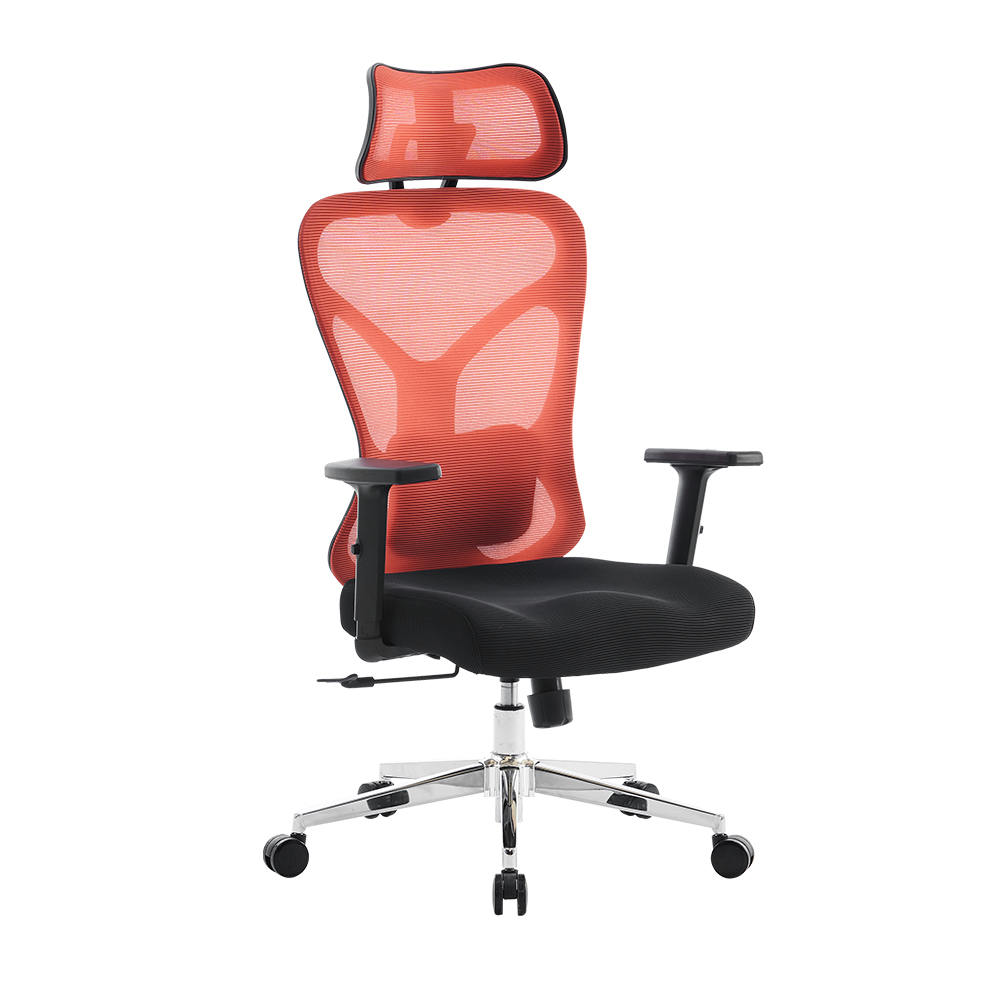
The Thermodynamics of Seating: Thermoregulation and Airflow
The primary engineering advantage of mesh over traditional foam is its superior convective heat transfer. Standard padded foam acts as an insulator, trapping body heat and moisture against the user's back, which can lead to localized hyperthermia and decreased cognitive focus. Utilizing a breathable mesh task chair for back pain prevention allows for constant passive airflow, maintaining the user's skin temperature at an optimal level for sustained concentration during summer months.
When comparing thermal retention, foam materials exhibit a significant heat-soak effect, whereas high-tensile mesh allows for immediate heat dissipation.
| Thermal Property | Traditional Padded Foam | Engineered Breathable Mesh |
| Heat Dissipation | Low (Heat is trapped in cell structure) | High (Open-weave allows convection) |
| Moisture Wicking | Absorption (Leads to humidity buildup) | Zero Retention (Dry contact surface) |
| Surface Temperature | Increases over time (+3-5°C) | Remains near ambient temperature |
Ergonomic Integrity: Pressure Distribution and Cervical Support
A mesh ergonomic office chair with headrest is designed to provide "dynamic suspension." Unlike foam, which can bottom out or lose its shape over time, high-quality elastomers used in mesh provide reactive tension. This is particularly important for the cervical spine. A high back mesh chair for office wholesale markets must feature an adjustable headrest to support the weight of the head (approx. 5kg), reducing the strain on the levator scapulae and trapezius muscles.
- Suspension Technology: The mesh distributes weight across the entire surface area, eliminating the high-pressure peaks found in standard foam seats.
- Cervical Alignment: The integrated headrest prevents "forward head posture," a common issue during intense computer work.
- Durability: Zhejiang Anji Kechen Furniture Co., Ltd. utilizes patented designs to ensure the mesh maintains its elasticity after thousands of compression cycles.
Impact on Summer Productivity: A Technical Perspective
Productivity is intrinsically linked to the body's metabolic rate and comfort levels. Investing in a heavy duty mesh executive chair with headrest minimizes the "fatigue effect" caused by physical discomfort. For corporate environments, choosing a mesh desk chair with adjustable lumbar support ensures that employees maintain a neutral pelvic tilt, even as ambient temperatures fluctuate. This reduces the frequency of "micro-breaks" taken to adjust sitting positions due to sweating or back stiffness.
Mechanical Comparison: Support Consistency
While foam provides initial softness, it often lacks the structural "memory" found in reinforced mesh composites during high-load scenarios.
- Pelvic StabilizationModerate (Deep compression)Superior (Consistent surface tension)
| Mechanical Metric | Foam Padding Seating | High-Tensile Mesh Seating |
| Long-term Support | Prone to permanent deformation (sagging) | Maintains tension through elastic memory |
| Maintenance | Requires deep cleaning (Dust/Allergens) | Hypoallergenic and easy to sanitize |
Engineering Excellence at Zhejiang Anji Kechen Furniture
With an 8,000 square meter facility and a dedicated R&D center, our company has created a full product chain system. Every mesh ergonomic office chair with headrest we produce is a result of rigorous industrial design and quality testing. Our independent marketing and technical services teams ensure that our partners in North America and Europe receive chairs that are not only aesthetically modern but also meet the highest ergonomic standards (BIFMA/ISO). By integrating several utility models and appearance patents, we offer high-quality products that are trusted by domestic and foreign customers alike.
Technical Comparison: High-Performance Mesh Seating vs. Industrial Standards
At Zhejiang Anji Kechen Furniture Co., Ltd., our R&D center focuses on the intersection of material science and human physiology. This technical sheet outlines the performance metrics of our mesh ergonomic office chair with headrest series, specifically focusing on the high-tensile elastomers and fire-retardant properties required for the North American and European markets.
1. Material Tensile Strength & Elastic Recovery
The longevity of a high back mesh chair for office wholesale distribution depends on the "Loss of Tension" (LoT) ratio. Our patented mesh weaves utilize a blend of polyester and thermoplastic polyurethane (TPU) to ensure the seat does not sag over time.
| Technical Metric | Standard Grade Mesh | Kechen Reinforced Mesh |
| Tensile Strength | < 2500 N | ≥ 3800 N (High-tensile weave) |
| Abrasion Resistance | 30,000 Rubs (Martindale) | ≥ 100,000 Rubs (Martindale) |
| Elastic Recovery Rate | 85% after 50k cycles | ≥ 96% after 100k cycles |
| Material Composition | Single-layer Nylon | Dual-layer Polyester + TPU Elastomer |
2. Global Safety & Fire Retardancy Certifications
To ensure our heavy duty mesh executive chair with headrest models are compliant with international building codes, we offer specialized treatments that meet the following rigorous standards:
- CAL 117-2013 (USA): Our mesh and internal components pass the smolder resistance tests required for the California market.
- BS 5852 (UK): High-specification options are available with "Crib 5" fire retardancy for public sector and hospitality use.
- BIFMA X5.1: Every mesh ergonomic office chair with headrest undergoes the "Drop Test" (static and dynamic) to guarantee structural safety for users up to 136kg (300lbs) as standard, with heavy-duty options available.
- ISO 21015: Verified for stability and durability in rigorous commercial office environments.
3. Ergonomic Adjustment Modules
The mesh desk chair with adjustable lumbar support system is designed with a "Synchronized-Tilt" mechanism. Unlike simple tilt chairs, our engineering allows the backrest and seat to move in a 2:1 ratio, which keeps the user's feet flat on the floor even while reclining.
| Feature Module | Engineering Specification | User Experience Impact |
| Headrest Adjustment | 60mm Height / 35° Rotation | Precise cervical vertebrae support |
| Armrest Type | 3D/4D (Height, Width, Depth) | Reduces shoulder and wrist torque |
| Lumbar System | Dual-Zone Dynamic Tension | Adaptive breathable mesh task chair for back pain relief |
| Gas Lift | Class 4 High-Strength Steel | Ultra-smooth height transitions and safety |
4. Manufacturing & Supply Chain Advantage
Based in Anji, our factory integrates a full product chain system. We independently cultivate technical backbones to oversee quality testing at every stage. This allows us to provide high-quality products at a competitive price, backed by several utility model patents and a dedicated after-sales service team.
Frequently Asked Questions (FAQ)
- Q1: Does the mesh lose its tension over time?
A: High-quality mesh ergonomic office chair with headrest models from Kechen use glass-fiber reinforced polymers that pass 100,000+ cycle fatigue tests to ensure the suspension remains firm for years. - Q2: Is a headrest necessary for standard office work?
A: While not always used during active typing, a headrest is vital during phone calls or "thinking phases" to allow the neck muscles to rest, preventing long-term cervical strain. - Q3: How do I clean a mesh chair?
A: Mesh is significantly easier to maintain than foam. Most debris can be vacuumed, and the surface can be wiped with a damp cloth without risking the mold or odors associated with foam absorption. - Q4: Can these chairs support higher weight capacities?
A: Yes, our heavy duty mesh executive chair with headrest models are engineered with reinforced frames and 4-stage gas lifts to support up to 150kg (330lbs). - Q5: Why choose Anji-based manufacturers for B2B?
A: Anji is the global center for chair manufacturing. Companies like Zhejiang Anji Kechen Furniture Co., Ltd. benefit from a highly specialized supply chain, ensuring the best balance of quality, price, and practicality.
Industry References
- ANSI/BIFMA X5.1: American National Standard For Office Furnishings - General Purpose Office Chairs.
- ISO 9241-5: Ergonomic requirements for office work with visual display terminals (VDTs).
- Cornell University Ergonomics Web: Guidelines for choosing an ergonomic office chair.
- Journal of Occupational Health: Studies on the impact of chair ventilation on thermal comfort and worker performance.