Español
 日本語
日本語 Deutsch

Article Directory
- 1 I. The Biomechanical Demands of Extended Seating
- 2 II. Lumbar Support Technology: Correcting and Sustaining the Spine
- 3 III. Cervical and Thoracic Spine Protection
- 4 IV. Procurement and Long-Term Value Assessment
- 5 V. Engineering for Lifelong Spinal Health
- 6 VI. Frequently Asked Questions (FAQ)
- 6.1 1. What is the technical requirement for the Adjustable lumbar support mechanism for spinal alignment?
- 6.2 2. How does Seat depth adjustment for optimal thigh pressure distribution prevent poor posture?
- 6.3 3. What distinguishes the findings of a Dynamic vs static lumbar support gaming chair review?
- 6.4 4. What is the critical function of a headrest according to Cervical spine support and headrest design analysis?
- 6.5 5. How is the 24 hour ergonomic chair posture correction effectiveness verified by the manufacturer?
I. The Biomechanical Demands of Extended Seating
For B2B procurement in high-utilization environments—such as 24/7 control centers, professional e-sports teams, or engineering firms—the ergonomic gaming office chair is not a luxury, but a core piece of occupational health infrastructure. The primary engineering challenge for a 24 hour ergonomic chair posture correction effectiveness is preventing the collapse of the spine's natural "S" curve (the lumbar lordosis and cervical curve) over sustained periods, which leads to fatigue and chronic pain (MSDs).
Zhejiang Anji Kechen Furniture Co., Ltd., leveraging its location in the "Hometown of the World Chair Industry" and its specialized R&D center, ensures that every product is manufactured based on rigorous ergonomic principles. Our comprehensive product chain system integrates design and quality testing to provide furniture trusted by domestic and foreign customers for its quality, appearance, and critical practicality in safeguarding user health.
II. Lumbar Support Technology: Correcting and Sustaining the Spine
The lumbar support system is the foundation of posture correction, designed to counteract the flattening of the lumbar spine that occurs when sitting.
A. Mechanism Functionality and User Fitment
An effective Adjustable lumbar support mechanism for spinal alignment must offer variability in both depth (to push the lower back forward) and height (to target the apex of the lumbar curve, which varies by user torso length). Proper height positioning is critical; misplacement can put undue pressure on the rib cage or sacrum, exacerbating discomfort. This adjustability ensures the chair can be customized to achieve Ergonomic fitment for manual recliner design for a broad range of users.
In the Dynamic vs static lumbar support gaming chair review, dynamic systems—which automatically move with the user's subtle shifts—are often preferred over fixed (static) pads, as they provide continuous support during minor movements, promoting better blood circulation and muscle activity.
| Lumbar Support Type | Compression and Movement | Effectiveness in 24 hour ergonomic chair posture correction effectiveness |
|---|---|---|
| Static (Fixed Pad) | Constant, fixed depth/height | Good, but requires user to maintain a single posture; less effective during micro-movements. |
| Dynamic (Self-Adjusting) | Flexes/pivots with user; supports movement | Excellent; maintains support during recline and subtle shifts, crucial for long-duration use. |
B. Posture Correction and Pelvic Tilt
The primary goal of the lumbar system is preventing posterior pelvic tilt, where the pelvis rotates backward, pulling the lumbar spine flat and leading to the "C" shape slouch. A well-designed Adjustable lumbar support mechanism for spinal alignment provides the necessary counter-force to keep the pelvis neutral and the spine naturally curved, a fundamental aspect of the 24 hour ergonomic chair posture correction effectiveness evaluation.
III. Cervical and Thoracic Spine Protection
Protection of the upper spine (thoracic and cervical regions) relies on integrated support systems that mitigate the strain caused by looking at screens.
A. Headrest Geometry and Support
A rigorous Cervical spine support and headrest design analysis focuses on the headrest's ability to maintain the cervical lordosis (the inward curve of the neck). The headrest must be adjustable in height and angle (often 3D or 4D adjustments) to align with the occiput and the atlas/axis vertebrae, supporting the head's weight without causing it to push forward. This minimizes strain on the trapezius muscles and neck flexors, critical for long-duration tasks in an ergonomic gaming office chair.
B. Seat Pan Engineering for Posture
The seat pan dimensions are surprisingly critical for upper body posture. Seat depth adjustment for optimal thigh pressure distribution ensures the user sits deep enough in the chair for the back to engage the lumbar support fully, without excessive pressure behind the knees. If the seat is too deep, the user is forced to slouch forward, rendering all back support features useless. If the seat is too shallow, uneven pressure distribution across the thighs can reduce circulation and cause discomfort.
IV. Procurement and Long-Term Value Assessment
B2B buyers must evaluate not just the presence of ergonomic features, but their sustained functionality over the product lifespan.
A. Certification and Durability
The longevity of the 24 hour ergonomic chair posture correction effectiveness depends on the durability of the internal mechanisms. Our production process ensures that adjustment mechanisms and high-density foams are built to resist sagging and loss of stiffness over thousands of hours of use, guaranteeing that the original ergonomic intent is preserved for years.
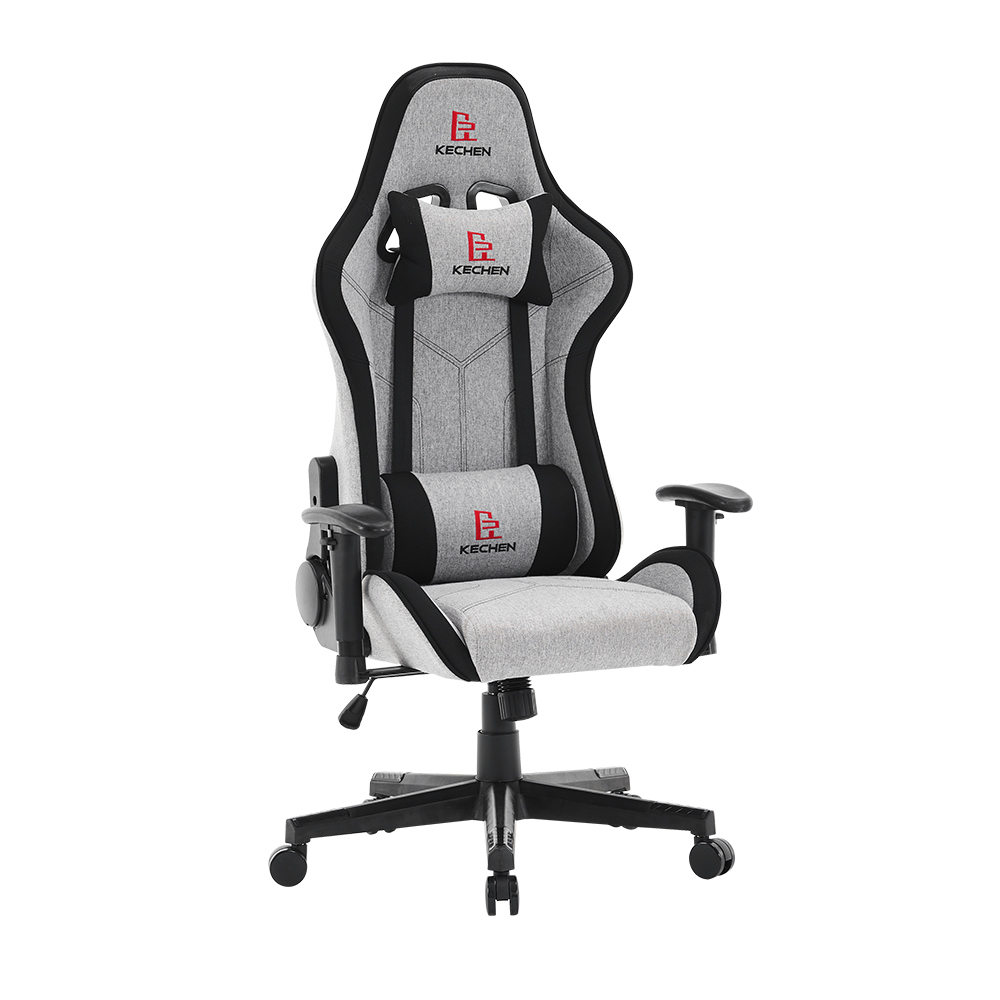
B. R&D and Customization for Ergonomics
Relying on strong R&D and design capabilities, Zhejiang Anji Kechen Furniture actively explores the market and supports customization. This means we can adjust critical dimensions—like the effective seat depth or the range of the Adjustable lumbar support mechanism for spinal alignment—to precisely match the anthropometric profiles of different North American, European, or domestic markets, delivering optimal ergonomic gaming office chair solutions worldwide.
V. Engineering for Lifelong Spinal Health
The effectiveness of an ergonomic gaming office chair for long-term health is determined by its ability to provide precise, stable, and customized support across the entire spinal column. Meticulous Cervical spine support and headrest design analysis coupled with a robust Adjustable lumbar support mechanism for spinal alignment ensures that the chair functions as a preventative health tool. Zhejiang Anji Kechen Furniture Co., Ltd. provides the manufacturing and technical expertise to deliver high-quality, practical, and trust-worthy seating solutions that truly meet the demanding needs of 24 hour ergonomic chair posture correction effectiveness.
VI. Frequently Asked Questions (FAQ)
1. What is the technical requirement for the Adjustable lumbar support mechanism for spinal alignment?
- A: The technical requirement is adjustability in both depth and height. The mechanism must allow the user to position the support precisely over the L3-L5 vertebrae, the apex of the lumbar curve, to provide effective counter-pressure and maintain the natural lordosis.
2. How does Seat depth adjustment for optimal thigh pressure distribution prevent poor posture?
- A: If the seat depth is too long, the user cannot reach the backrest and is forced to slouch forward, negating the lumbar support. If the depth is correctly adjusted (with a 2-3 finger gap between the seat edge and the back of the knee), the user can sit fully back, distributing weight evenly and ensuring the spine engages the lumbar support.
3. What distinguishes the findings of a Dynamic vs static lumbar support gaming chair review?
- A: The Dynamic vs static lumbar support gaming chair review often finds that dynamic (or active) support is superior for long-duration use because it moves with the user, maintaining constant support during subtle shifts in posture or during a slight recline, whereas static support only works optimally in one fixed position.
4. What is the critical function of a headrest according to Cervical spine support and headrest design analysis?
- A: The critical function is to support the head's weight during periods of rest or deep recline, maintaining the natural cervical curve and preventing forward head posture. It should be adjustable so the convex curve of the headrest meets the concave curve of the user's neck.
5. How is the 24 hour ergonomic chair posture correction effectiveness verified by the manufacturer?
- A: Effectiveness is verified through a full product chain system including R&D, structural design, and quality testing. Testing includes endurance cycles on the adjustment mechanisms and assessment of foam density retention to ensure that the core dimensions and support features remain stable and functional over thousands of hours of use, upholding the chair's long-term ergonomic integrity.