Español
 日本語
 Deutsch

Article Directory
- 1 1. Mesh Material and Weave: The First Thing Your Customers Feel
- 2 2. Gas Lift Certification: A Non-Negotiable Safety Check
- 3 3. Tilt Mechanism: The Part Most Buyers Underestimate
- 4 4. Armrest Adjustability: How Much Is Actually Necessary?
- 5 5. Base and Caster Load Capacity: More Than a Weight Rating
- 6 6. Flame Retardancy and Material Compliance
- 7 7. Packaging and Container Loading Efficiency
- 8 8. Batch Consistency: The Hidden Risk of Wholesale Orders
- 9 9. Supplier Quality Control and After-Sales Support
- 10 Final Buying Checklist for Full Mesh Office Chairs Wholesale
A procurement manager opens a sample box from a Chinese factory, sits in the chair for ten seconds, and nods. The price is attractive, the mesh looks fine, and the mechanism feels smooth. Three months later, the first batch of complaints arrives: the mesh sags visibly, the gas lift sinks slowly, and the tilt tension cannot hold a heavier user. This scenario repeats every year in the office furniture trade, and it is almost always preventable.
Buying full mesh office chairs wholesale is not the same as buying a few units for your own office. The decision affects your margin, your brand reputation, and your container utilization. In short, the right wholesale approach comes down to nine factors: mesh material and construction, gas lift safety certification, tilt mechanism durability, armrest adjustability, base and caster load capacity, flame retardancy compliance, packaging efficiency, batch consistency, and supplier quality control. Below is a practical breakdown of each factor, written from the perspective of someone who has sourced seating from the Anji cluster in Zhejiang, China, where most of the world’s office chairs are manufactured.
1. Mesh Material and Weave: The First Thing Your Customers Feel
The mesh is the defining feature of a full mesh office chair. It determines breathability, elasticity, and how long the chair keeps its shape. When sourcing wholesale, you need to specify more than “mesh fabric.” You need a construction that resists sagging and supports the lumbar area for years of daily use.
The most common mesh backrests in the wholesale market are made from nylon and polyester. High-elasticity nylon mesh is the better choice for premium lines because it flexes as the user moves, redistributes pressure, and retains tension longer. Polyester mesh is less expensive and still breathable, but it tends to lose elasticity faster, especially in hot climates. For high-frequency environments like call centers, 24-hour operations, or multi-shift offices, a high-elasticity nylon mesh with a tight weave is the safer specification.
Some factories now use an elastomer-coated mesh that adds a soft-touch surface while keeping structural tension. This is a reasonable mid-tier upgrade, but verify the coating’s durability with a rubbing test before committing to a full order.
When evaluating mesh, ask for these specifics:
- Mesh weight in grams per square meter (GSM). A higher GSM usually means a denser weave and better support.
- Elasticity retention data. A simple test is to press the mesh repeatedly and see if it returns to its original shape.
- Air permeability performance. Full mesh chairs are chosen for hot environments, so verify that airflow is actually adequate.
- Color fastness. This matters if your customers sit in direct sunlight.
One durable option in this category is the 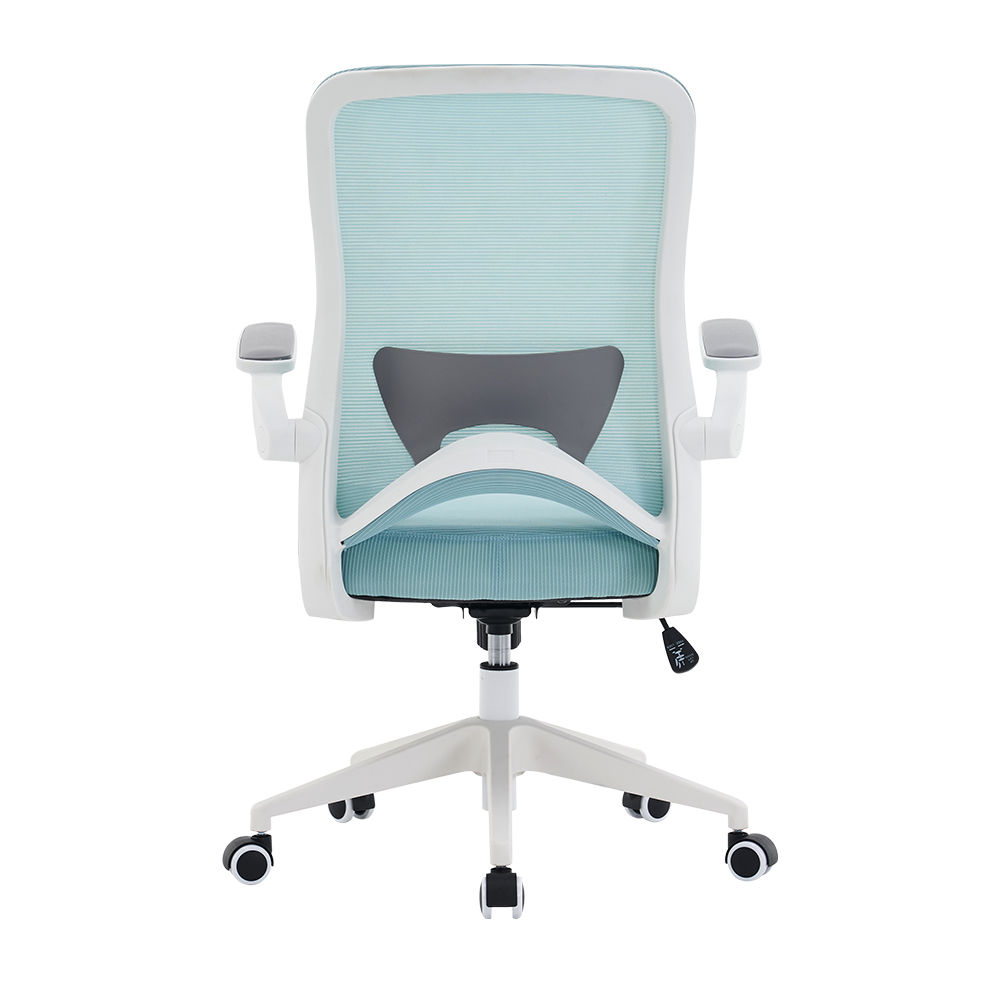 5123 Durable Breathable Mesh Office Chair for Extended SeatingThis wholesale-friendly mesh chair offers a breathable backrest and tested mechanical parts, making it a solid benchmark for mid-priced task seating in offices.View Product → 5123 model, which is built around a breathable mesh backrest designed for long working hours. It is a good benchmark for what a mid-priced wholesale mesh chair should include: a supportive back, a breathable seat, and a simple form that works in both office and home settings.
2. Gas Lift Certification: A Non-Negotiable Safety Check
The gas lift is the single most safety-critical component in any office chair. A substandard cylinder can fail catastrophically, and for a wholesale buyer, a defective gas lift is a product liability problem, not just a quality issue.
For any market you export to, check the relevant certification: BIFMA in North America, EN 1335 and EN 45545 in Europe, or other local standards depending on your destination country. A reliable factory will provide certification documentation without hesitation. If a supplier hesitates or offers only a vague “we pass testing” statement, that is a red flag.
Beyond certification, evaluate the gas lift class. For standard office use, a Class 2 or Class 3 gas lift is usually sufficient. For heavier users or 24-hour environments, a Class 4 lift provides higher load capacity and more stable height adjustment. Wholesale buyers should specify the gas lift class in the contract, not leave it as a factory default.
3. Tilt Mechanism: The Part Most Buyers Underestimate
The tilt mechanism is what separates a two-hour chair from an eight-hour chair. A full mesh office chair is often expected to support both upright focused work and relaxing recline positions. If the mechanism is weak, the chair will feel unstable, and the tension adjustment will fail after a few months.
There are three common mechanism types in the wholesale market: single-lever tilt, synchronized tilt, and multi-functional tilt with adjustable tension. For most office applications, synchronized tilt is the sweet spot because the backrest and seat move together, keeping the user’s feet on the ground and maintaining a natural viewing angle. Multi-functional tilt with a lockable recline is useful for team members who alternate between typing, meetings, and screen review.
However, a mechanism is only as good as its steel quality and bushing components. Ask the factory which steel grade it uses and whether the bearing surfaces are reinforced. The difference often shows at the one-year mark, when cheap mechanisms start squeaking and wobbling.
For a reference point, the 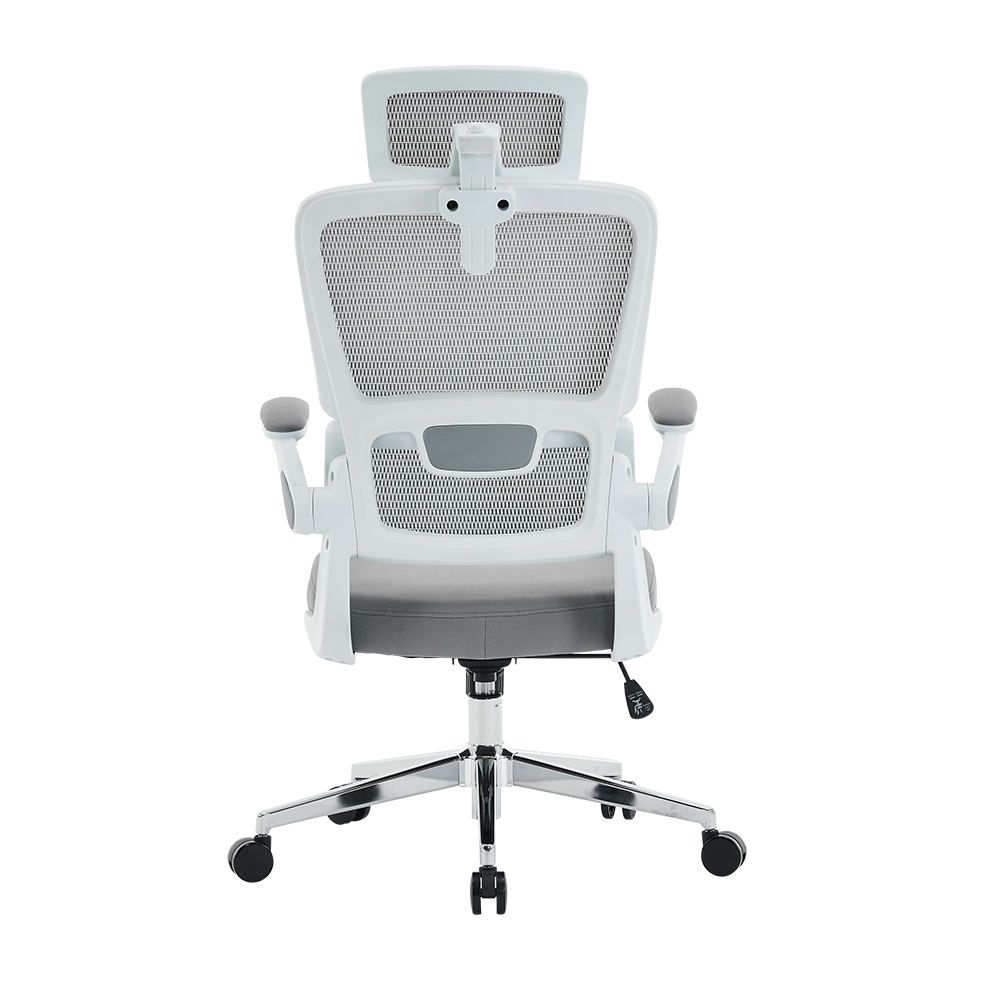 5115 Ergonomic Mechanical Mesh Chair with Lumbar AdjustmentA mechanically adjustable mesh chair for home or office use, with contoured back support and tilt controls suited for users who need reliable posture support.View Product → 5115 model uses a mechanical mesh structure that emphasizes a balanced, long-session seating feel. Its construction reflects the type of attention to mechanism behavior that importers should look for when comparing supplier offerings.
4. Armrest Adjustability: How Much Is Actually Necessary?
Armrests are one of the most visible differentiation points between a budget chair and a mid-range chair. In a wholesale context, the question is not “how many adjustments can we add?” but “which adjustments will your end users actually use?”
Fixed armrests are simple and durable, but they can cause shoulder fatigue for users whose desk height does not align with the armrest height. 2D armrests (height and rotation) are the most common upgrade for office use and add minimal cost. 4D armrests add forward/backward and width adjustments, which are appreciated in high-end settings but also increase cost and potential failure points.
For a typical office furniture order, 2D or 3D armrests provide the best value. They solve the primary ergonomic complaint—armrest height—without inflating the unit price. Make sure to test the armrest locking mechanism because this is where many budget chairs fail. A wobbly armrest at the three-month mark is a common complaint that leads to chargebacks or returns.
Wholesale buyers who want an example of a chair with functional, adjustable armrests should look at the 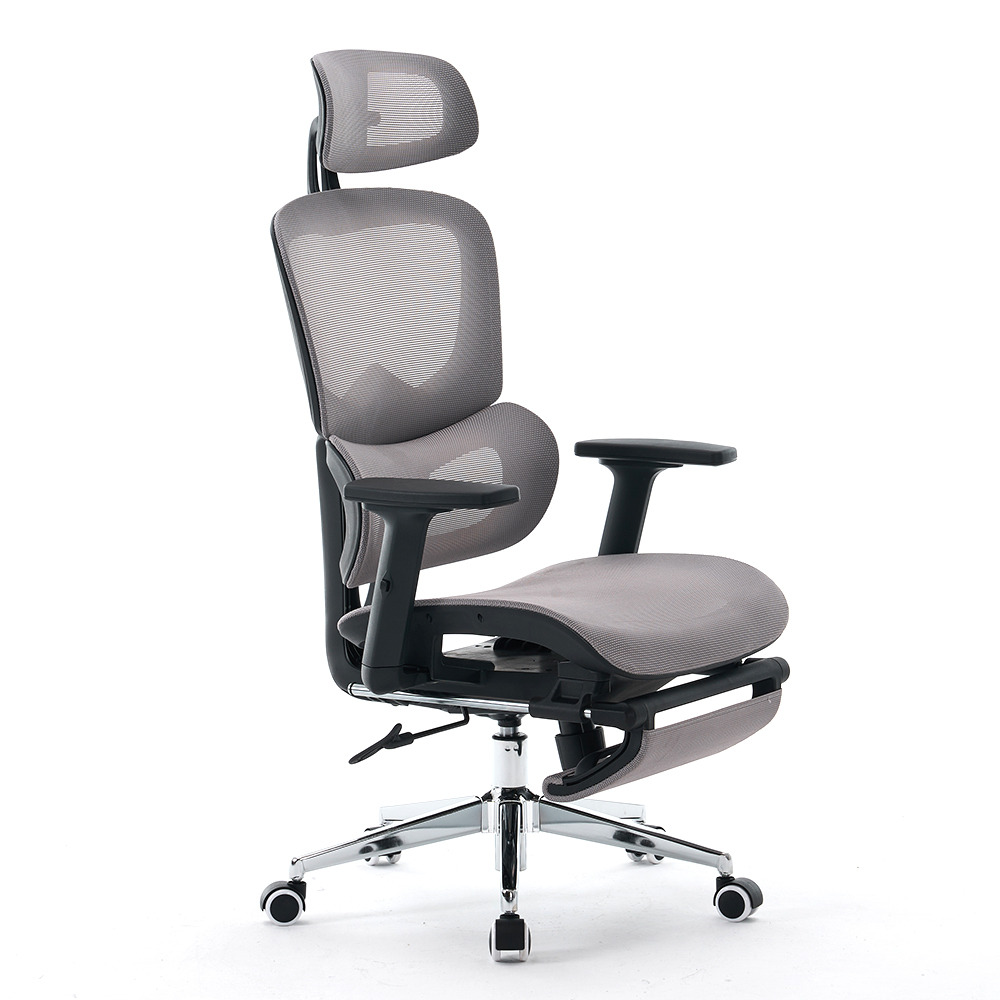 5122 Ergonomic Mesh Chair with 2D Adjustable ArmrestsThis chair adds practical 2D armrests and a breathable mesh back, offering adjustable forearm positioning and lumbar support for extended computer work.View Product → 5122 model, which comes with 2D armrests—a practical specification that supports office users without pushing the price into premium territory.
5. Base and Caster Load Capacity: More Than a Weight Rating
A full mesh office chair often looks lightweight, but the base and casters carry real, sustained load. The nylon base on many wholesale chairs is rated for roughly 110 to 130 kg. That may be acceptable for standard office populations, but if your customer base includes larger users, look for a reinforced base or a steel base.
Equally important is the set of casters. For hard flooring and carpeted offices, dual-wheel casters with a polyurethane (PU) tread offer better floor protection and quieter rolling than hard plastic casters. If your target market has mostly hard floors, PU casters should be a default requirement, not an upsell.
Ask the supplier for a load test report on the base and caster assembly. It is a simple piece of documentation that can save you from a costly product recall.
6. Flame Retardancy and Material Compliance
Full mesh chairs reduce the amount of foam and upholstery compared to leather or fabric chairs, but the plastics, mesh, and foam in the seat pan still need to meet fire safety standards in your target market. California Technical Bulletin 117-2013, EN 1021, and BS 5852 are common references depending on the destination.
In practice, most reputable Chinese factories can supply flame-retardant (FR) mesh and foam upon request. The risk is in the paperwork. Your contract should state the specific standard for the destination market, and the factory should provide test reports from an accredited third-party lab. Do not rely on a supplier’s in-house test results alone.
7. Packaging and Container Loading Efficiency
For wholesale buyers, packaging affects both cost per unit and product safety. A chair that arrives damaged creates customer service costs that eat into your margin. Conversely, a chair that is over-packaged wastes container space and raises freight cost per unit.
Most flat-pack office chairs are partially assembled: the base, gas lift, seat, backrest, and mechanism are separated, with the backrest attached by a few screws. This is standard and acceptable as long as the carton offers enough crush protection for the backrest edges and armrests, which are the most fragile parts.
Before finalizing an order, ask the factory for the loaded quantity per 20-foot and 40-foot container, and test one carton through a drop test. A slight adjustment in carton dimensions often improves loading without compromising protection. A good factory will share this data openly, because it wants your repeat orders.
8. Batch Consistency: The Hidden Risk of Wholesale Orders
When you buy fifty chairs for a single office, you can inspect every unit. When you buy a container of five hundred chairs, you need to rely on the factory’s process control. Batch consistency is the real challenge in wholesale sourcing, and it is the reason why a brand-new supplier may deliver perfectly in the first sample batch and then ship an inconsistent production batch.
You should ask the supplier three practical questions. First, what is your incoming material inspection process for mesh fabric rolls? Second, what are your in-line production checks for gas lift installation and tilt mechanism assembly? Third, what are your final random inspection criteria before shipment? These questions are often more revealing than a tour of the showroom.
It is also wise to request sealed samples after the production run is confirmed, and to require pre-shipment inspection by a third-party agency or your own QC personnel. This adds cost but is still cheaper than handling returns and negative reviews after the chairs are landed.
9. Supplier Quality Control and After-Sales Support
Finally, assess the supplier’s quality control infrastructure and their willingness to back their product with clear warranty terms. A full mesh chair should last at least three years under daily office use, and a responsible wholesale supplier will define the warranty period and the resolution process in writing.
When you source from the Anji cluster, you are close to the heart of China’s chair industry. The ecosystem includes specialized mesh suppliers, gas lift manufacturers, molding shops, and assembly plants. A factory like Anji Kechen Furniture, which positions itself around design, production, and in-house quality testing, fits the profile of a supplier that can manage the whole chain rather than just assembling parts. The breadth of their product range—from mesh office chairs to gaming chairs and specialized simulation seats—also signals manufacturing maturity that matters when issues arise after shipment.
A supplier who can produce consistent full mesh chairs, provide honest certification documents, and respond quickly to after-sales claims is worth a slightly higher unit price. Over the lifecycle of your inventory, fewer returns and less administrative overhead will outweigh the initial cost difference.
Final Buying Checklist for Full Mesh Office Chairs Wholesale
When you compare quotes from different factories, use a standardized evaluation, not just a price comparison. Write down the mesh type, gas lift class, mechanism type, armrest adjustment, caster specification, FR standard, packaging dimensions, and warranty terms for each supplier. Then compare them line by line. This prevents the “cheapest quote wins” trap that has eroded many importers’ margins.
For a more complete framework on what makes a mesh chair genuinely supportive and durable, reviewing industry guides on mesh chair back support and material behavior can help you communicate requirements to your supplier with more precision. Similarly, if you are planning to offer a range of mesh chairs alongside gaming-style seating, the ergonomic principles covered in this comparison of mesh and gaming chair ergonomics will help you decide which product lines to carry.
The bottom line is simple: a full mesh office chair works for a broad range of users because it breathes, adapts, and avoids the heat buildup of padded upholstery. When you buy wholesale, your job is to translate that general appeal into a specific specification that a factory can reproduce five hundred times with the same result. Know the components, test the samples, verify the certifications, and then let the factory do what it does best.