Español
 日本語
日本語 Deutsch

Article Directory
- 1 I. Engineering for Continuous Human Performance
- 2 II. Cushioning Technology: The Foundation of Endurance
- 3 III. The Crucial Role of Dynamic Support Systems
- 4 IV. Advanced Component Adjustability for Fatigue Mitigation
- 5 V. Structural Integrity and Certifications for B2B Procurement
- 6 VI. Conclusion: Achieving Minimal Fatigue
- 7 VII. Frequently Asked Questions (FAQ)
- 7.1 1. What is the minimum foam density required for a chair to be considered 24-hour rated?
- 7.2 2. How do I evaluate the durability of the chair base?
- 7.3 3. What is the difference between a dynamic and fixed lumbar support?
- 7.4 4. How does a 4D armrest specifically reduce shoulder strain?
- 7.5 5. What are the key non-ergonomic technical specifications for 24 hour rated gaming chairs?
I. Engineering for Continuous Human Performance
The modern ergonomic gaming office chair, particularly those marketed with a "24-hour" rating, must be viewed not as furniture, but as a piece of high-performance technical equipment. The design challenge for manufacturers like Zhejiang Anji Kechen Furniture Co., Ltd. is not merely to offer comfort, but to engineer continuous physiological support to minimize the onset of musculoskeletal fatigue over prolonged periods.
Located in Anji, the "Hometown of the World Chair Industry," our company integrates industrial design, R&D, and large-scale production. We rely on strong R&D capabilities, a dedicated R&D center, and comprehensive manufacturing expertise to ensure every product's design is based on rigorous ergonomics. For B2B buyers, understanding the underlying technical specifications for 24 hour rated gaming chairs is crucial for ensuring product longevity and end-user performance.
II. Cushioning Technology: The Foundation of Endurance
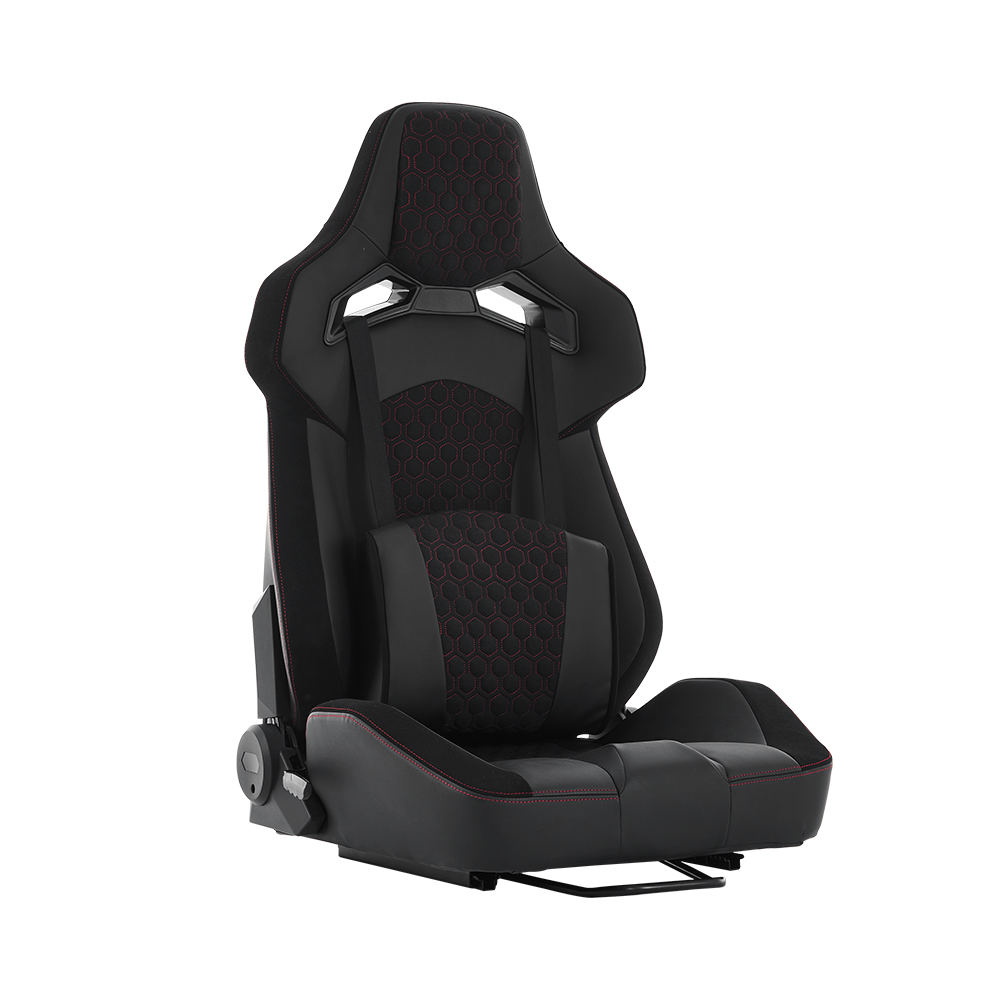
The seat and back cushioning are the first line of defense against pressure points and fatigue. For true 24-hour usability, standard cut foam is inadequate due to its rapid compression set. The industry standard for continuous use is Cold Cure Foam.
Density and Resilience: The cold cure foam density standards for extended seating
Cold Cure Foam is molded, resulting in a non-uniform cell structure that provides exceptional elasticity and long-term shape retention. The key metric for B2B buyers is density, which defines load-bearing capacity and support life. Premium ergonomic gaming office chair designs utilize foam density metrics that exceed standard office seating.
A density of $50-60\text{ kg/m}^3$ ($3.1-3.7\text{ lb/ft}^3$) is typically required for 24-hour rated seating. This level of density ensures that the Initial Load Deflection (ILD) remains consistent after thousands of load cycles, preventing the sensation of "bottoming out."
The comparison below demonstrates the technical inadequacy of standard foam for long-duration applications:
Foam Type Performance Metrics for Continuous Use (24-Hour Rating)
| Foam Type | Target Density ($\text{kg/m}^3$) | Compression Set (After 10k Cycles) | Fatigue Resistance |
|---|---|---|---|
| Cold Cure Molded Foam | 50-60 | < 5% | Excellent (Required for 24-hour rating) |
| Standard Cut Polyurethane Foam | 35-45 | > 15% | Poor (Leads to rapid loss of support/fatigue) |
III. The Crucial Role of Dynamic Support Systems
Sustained comfort relies on the chair's ability to adapt to natural human movement. A rigid, fixed structure promotes static loading, which is a primary cause of back and neck pain in long seating periods.
Lumbar Support: Fixed vs. Dynamic
The choice between a dynamic lumbar support system vs fixed support in office chairs is critical for 24-hour applications. A fixed lumbar cushion only provides adequate support in one posture. A dynamic (or kinetic) system, utilizing tension adjustments or a flexible, independently suspended structure, tracks the user's spine as they shift posture (lean, recline, or slouch). This prevents the lower back from losing crucial support during continuous movement, thus significantly minimizing fatigue.
Furthermore, a premium ergonomic gaming office chair must offer independent adjustment of headrest height and angle. The headrest must support the weight of the head, minimizing static muscle strain in the neck (cervical spine) during both upright and deeply reclined postures.
IV. Advanced Component Adjustability for Fatigue Mitigation
Peripheral component adjustability directly impacts upper body comfort and minimizes strain on secondary muscle groups.
Armrests and Shoulder Strain
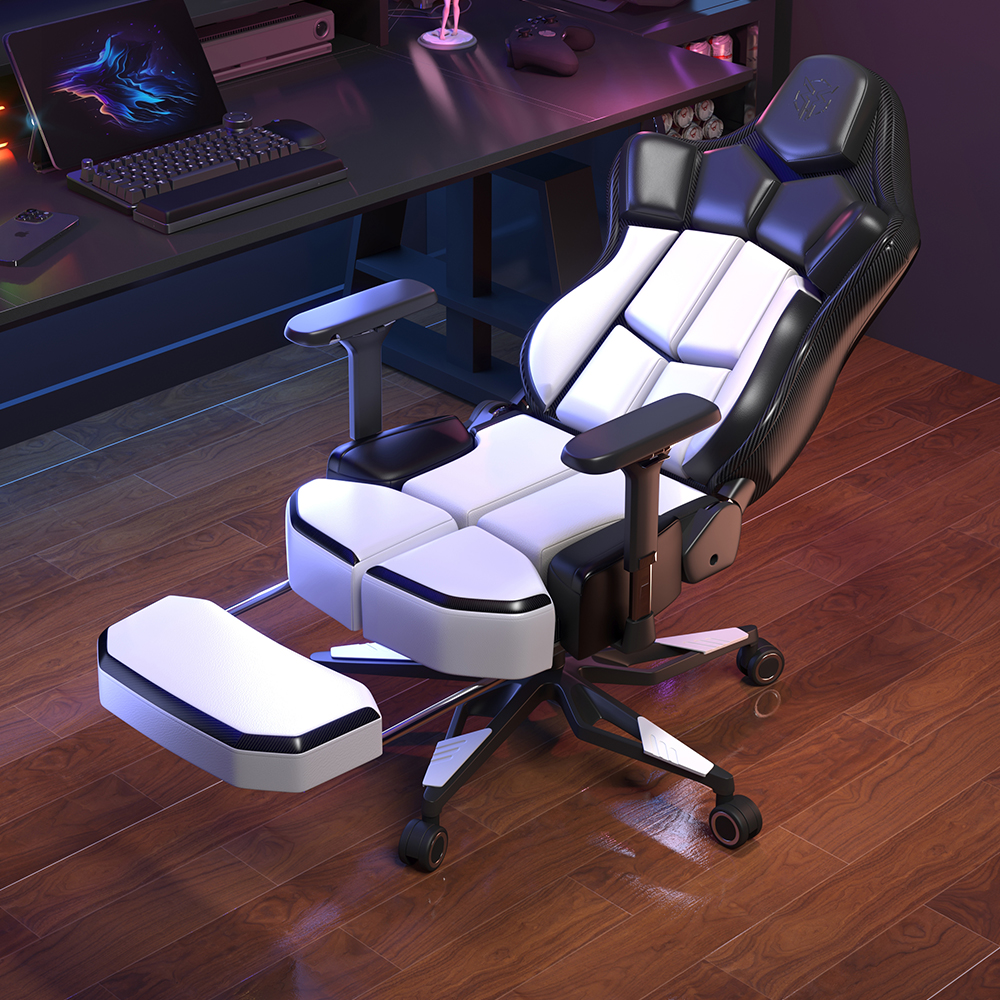
The height, depth, width, and pivot of the armrests are crucial. The impact of 4D armrests on long-term shoulder strain is technically quantifiable. By allowing movement in four dimensions (Height, Width, Depth, Pivot), 4D armrests ensure that the user can maintain their forearms at the same height as their desk surface, keeping the elbow at the ergonomically ideal $90^{\circ}$ angle and preventing the shoulders from hiking up or slumping down. This eliminates static tension in the trapezius muscles.
Reclining and Tilt Mechanisms
The mechanism should facilitate "active sitting." The Synchro-Tilt mechanism allows the backrest and seat pan to recline at a synchronized ratio (e.g., 2:1), encouraging movement and improving blood flow. A Multi-functional Tilt (MFD) mechanism offers superior control, allowing independent locking of the tilt angle and the upright angle, essential for both focused work and rest.
Tilt Mechanism Technical Differences for Continuous Use
| Mechanism Type | Key Functionality | Body Posture Maintenance | Suitability for 24-Hour Use |
|---|---|---|---|
| Synchro-Tilt | Back reclines faster than the seat angle shifts (e.g., 2:1 ratio). | Good; encourages posture changes and improved circulation. | Entry-level 24-hour rating. |
| Multi-functional Tilt (MFD) | Independent seat angle lock, back angle lock, and tension adjustment. | Excellent; allows precise adjustment to the user's center of gravity. | Optimal for 24-hour rating and personalized comfort. |
V. Structural Integrity and Certifications for B2B Procurement
For B2B buyers, the "24-hour" claim must be validated by the durability of the chair's components, not just the foam and fabric. The technical specifications for 24 hour rated gaming chairs demand certification against recognized stress tests.
Base and Cylinder Durability
The gas cylinder must be Class 4 certified (heavy duty), and the base must pass stringent load tests. The B2B guide to ergonomic gaming chair base durability emphasizes the material of the base. Aluminum Alloy bases typically offer superior fatigue resistance and maximum static load capacity compared to heavy-duty Nylon or reinforced plastic bases, making them the preferred choice for 24-hour operation and high-weight capacity requirements.
Zhejiang Anji Kechen Furniture Co., Ltd. has established a full product chain system integrating design, manufacturing, and rigorous quality testing. Our manufacturing capabilities, paired with several utility models and appearance patents, ensure that every component meets the high quality, appearance, price, and practicality demands of domestic and foreign customers.
VI. Conclusion: Achieving Minimal Fatigue
A true 24-hour ergonomic gaming office chair requires a convergence of superior technical specifications: high-density cold cure foam ($50+\text{ kg/m}^3$), a responsive dynamic lumbar system, and precise multi-functional adjustability (e.g., 4D armrests). By relying on proven ergonomic principles and certified component durability, manufacturers can deliver chairs that genuinely minimize fatigue and support continuous high-level performance, establishing long-term cooperative relations with discerning B2B customers in North America, Europe, and beyond.
VII. Frequently Asked Questions (FAQ)
1. What is the minimum foam density required for a chair to be considered 24-hour rated?
For genuine 24-hour rating, the seat foam should be Cold Cure Molded Foam with a minimum density of $50\text{ kg/m}^3$ ($3.1\text{ lb/ft}^3$) to prevent permanent compression set and maintain long-term support, aligning with the cold cure foam density standards for extended seating.
2. How do I evaluate the durability of the chair base?
Consult the B2B guide to ergonomic gaming chair base durability which prioritizes base material (Aluminum Alloy over reinforced plastic for longevity) and BIFMA certification for passing cyclic load and stability tests. Look for a Class 4 gas lift cylinder.
3. What is the difference between a dynamic and fixed lumbar support?
A fixed lumbar support provides a static curvature that is only optimal in one posture. A dynamic lumbar support system vs fixed support in office chairs offers continuous, responsive support that adjusts automatically as the user reclines or shifts, which is essential for minimizing fatigue during continuous 24-hour use.
4. How does a 4D armrest specifically reduce shoulder strain?
The impact of 4D armrests on long-term shoulder strain is reduced by enabling the user to position their forearms level with their working surface (desk or keyboard), supporting the weight of the arms and preventing the trapezius muscles from remaining in a state of static tension (shoulder shrugging).
5. What are the key non-ergonomic technical specifications for 24 hour rated gaming chairs?
Beyond ergonomic features, key non-ergonomic technical specifications include a certified Class 4 gas lift, the frame's material grade (often heavy-gauge steel), and upholstery abrasion ratings (e.g., $100,000+$ double rubs) to ensure structural and material endurance over a 24-hour cycle and extended lifespan.